
Σωματείο Όλυμπος

Δραστηριότητες

Olympos_Logo

Aether Cosmos – Lodge Α

Anthropic Principle
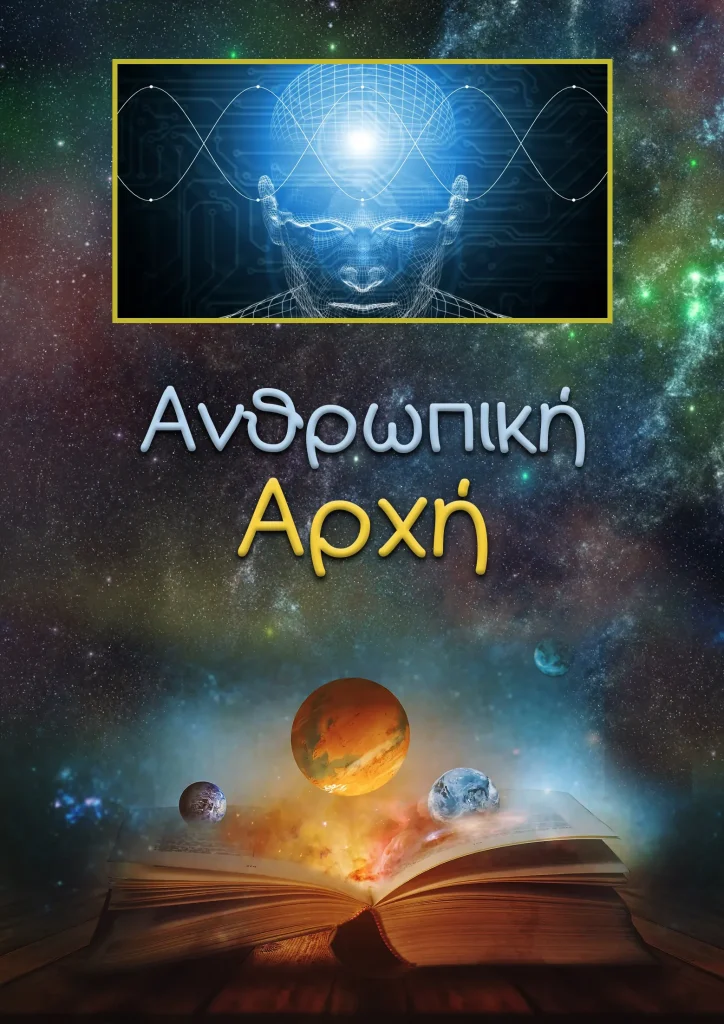
The Anthropic Authority holds that any cosmological theory must also interpret the existence of man in the Universe. The Anthropic Principle refers in the first place to the specific values that certain parameters have in Physics. If, for example, the probability of photons being emitted or absorbed by electrons were infinitesimally greater or less, the stars would either have exploded or would not be able to convert hydrogen and helium into carbon and oxygen.. In both cases we humans would not have been created. Most of these values would correspond to a Universe that, although it might be very beautiful, would not contain any being capable of admiring that beauty. Somehow the Universe conspired to create man. The human theory for those who have not encountered the term comes in two “forms”. The strong and the weak. The basic argument for each is: The Universe is the way it is because if it were otherwise we would not exist to observe it [WEAK]. The Universe is the way it is because we exist [STRONG]. A different form of this anthropic theory accepts that a Creator made the Cosmos specifically for man (Theistic Principle). The anthropic cosmological principle is contrary to the position of the perfect cosmological principle. For it states that we observe the universe at a specific period of time, whereas in the perfect principle the universe must appear the same at any time. In the anthropic principle there are special conditions for the appearance of man, a special period of time. There are other versions of the anthropic principle today, from the extremely weak ones that can be described as trivial, to the extremely strong ones that can be described as irrational.
  1. Weak anthropic principle: “What we observe about the universe is limited by the requirement to exist as observers.”
  2. Strong-weak anthropic principle: “In at least one world, out of the universe of many worlds, life must develop.”
  3. Strong anthropic principle: “The properties of the universe must be such that, at some point, life can develop.”
  4. Final Anthropic Principle: “Intelligence in the universe must be developed and never extinguished.”
Although most scientists are not willing to adopt a strong version of the anthropic principle, few would disagree with the usefulness of certain weak arguments. The weak anthropic principle essentially amounts to an explanation of which of the various epochs or regions of the universe we could unify. For example, the Big Bang happened about 14 billion years ago because the Universe must be old enough that some stars have completed their evolution and produced elements such as oxygen and carbon (of which we are made), but also young enough that there are still stars capable of providing energy to sustain life. MIT physicist Vera Kisakowski, who embraces the strong anthropic principle and believes it is evidence for the existence of God, says that the exquisite order revealed to us through scientific understanding of the natural world points to the divine. This view is shared by particle physics expert John Polkinhorn, who left his post at Cambridge University to become a priest in the Anglican Church. According to Polkinhorn, the universe “is not ‘just any world,’ but a world special and perfectly tuned for life because it was made by the Creator and that was His will.” Ακόμα και ο Νεύτων, ο άνθρωπος που μίλησε πρώτος για τους αμετάβλητους νόμους που κινούν τους πλανήτες και τα άστρα χωρίς θεϊκή παρέμβαση, πίστευε ότι η τελειότητα αυτών των νόμων υποδηλώνει την ύπαρξη του Θεού. Nobel Prize-winning physicist Stephen Weinberg, though unconvinced of the truth of the anthropic principle, nevertheless acknowledges its appeal: “Man has an irresistible tendency to believe that his relationship with the universe is special, that human life is not the apparent result of a chain of random events going back to the first three minutes, but that we have been an integral part of it from the beginning.” Nevertheless, he believes that the strong human principle “is nothing but mystical gibberish.” Other scientists question the human principle even more strongly. The late physicist Heinz Pagels, although initially impressed by the anthropic principle, eventually lost interest because, he argued, the principle lacked predictive power. In his view, it is a theory that cannot be tested and from which we cannot derive information, so it eventually falls into a torrent of empty content-less tautologies – such as that we exist because we exist. The anthropic principle was also rejected by Gath, saying: “I don’t think one would use the anthropic principle if a better explanation were available. As far as I know, for example, there is no human principle for world history. It is to the anthropic principle that people resort when they cannot think of anything better.” Also, the majority of cosmologists reject the anthropic principle because they accept that these matters are scientific and should be studied in the realm of physics and not in the realm of philosophy. That is, there is a danger of an arbitrary teleology, i.e. the belief that from the beginning of the Universe there was a purpose (the creation of humans in general in one case, the creation of myself in particular in the second), a kind of inversion of causality where the future determines the past. Basically, anthropic theory makes the following simple point: It observes what conditions exist in the Universe today and comes to declare, in hindsight, that if it were not for today’s conditions, humans would not be here to know the Universe. Cosmologists who deny the anthropic principle, on the other hand, are satisfied with a chaotic beginning of the universe. The cosmologists who accept it, however, opt for a universe that always remains simple from the initial moment to eternity, but they do not explain why it has remained simple and regular for so many billions of years. Basically, the weak theory is more accepted in the world (especially the religious world), while the strong one stands for something special for the human race. The latter gives a Purpose to the Universe, it is more beautiful as a thought but more “fantastic” and “unsubstantiated” than the former. But mistakes are also made on the other side. Stephen Hawking, in his book “The Time Chronicle”, says that because there are no boundary conditions at the beginning of space-time, there is no God. In other words, Hawking thinks that it is not necessary for God to exist because of boundary conditions. Of course God for believers is not a boundary condition but neither are present conditions the ones that establish a Creator.   Objections to the strong anthropic principle A first objection concerns the assumption that there are many different “universes” or many different regions of the Universe. In what sense can one say that all these different “universes” exist? If these “universes” are truly separated from each other, events occurring in another Universe cannot have observable consequences in our Universe. Conversely, if they are not separated from each other but are simply different regions of the same universe, the laws of physics must be the same in each of these regions, otherwise there would be no continuity between them and one could not pass from one region to another. In this case, the only difference between the different regions would be their different initial sets of characteristics, and thus the strong anthropic principle would degenerate into the weak one. A second objection to the strong anthropic principle is that it goes against the grain of the entire history of physics. Cosmological theories have evolved from the geocentric theory of Ptolemy and his precursors to the heliocentric theory of Copernicus and Galileo, and from that to the modern picture that the Earth is a common planet orbiting a common star, that common star being one of the hundred billion stars in a common spiral galaxy, which itself is one of the approximately one trillion galaxies in the visible Universe. But according to the strong anthropic principle, this entire vast structure exists simply for our sake! It is very difficult to believe such a thing. Our solar system is of course necessary for our existence, and one could say the same for the entire Milky Way, since the previous generation of stars is necessary for the creation of the heavier elements. But there does not seem to be any necessity that could justify the existence of all these galaxies and their uniform and orderly distribution in the Universe. We would be more satisfied with the anthropic principle, at least the weak version of it, if we could show that many different initial sets of features of the Universe could evolve to eventually lead to a Universe like the one we observe around us today. If this is indeed the case, a Universe that evolved from some kind of random initial conditions would contain some regions that are uniform and smooth, and also suitable for the emergence and evolution of life. Otherwise, the initial conditions of the Universe would have had to have been chosen extremely carefully to lead to something like what we see around us today. According to the Hot Big Bang model, there would not have been enough time for heat to be transferred from one remote region to another. This means that all regions of the Universe would have had to have had exactly the same temperature from the beginning* which would explain why diffuse microwave radiation today has exactly the same temperature in any direction we look. The initial expansion rate of the Universe would also have to have been chosen very precisely to maintain even today so close to the limiting expansion rate needed to prevent gravitational collapse. All of this means that the initial conditions of the Universe would really have had to have been chosen extremely carefully if the Hot Big Bang model correctly describes the evolution of the Universe just after the beginning of time. But it would be very difficult to explain why the Universe began to exist in exactly this way, unless one invokes a Divine Providence designed to create intelligent beings. These are views that confuse science with religion, like physics with the anthropic principle. There is conflict on the one hand and dialogue about the beginning of the universe on the other between them, when there is no reason for conflict and dialogue about the foundation of cosmological principles. References to: The Anthropic Principle, Barrow etc., Lexima Publications and Stephen Hawking’s Chronicle of Time.
Shopping cart0
There are no products in the cart!
Continue shopping
0